Forklift Training - What You Need To Know
Operating a forklift safely requires proper training, certification, and ongoing practice. Whether you're an employer looking to train your team or an individual hoping to get certified, understanding the requirements, costs, and best practices is essential. This guide breaks down everything you need to know about forklift training so you can stay safe, compliant, and confident on the job.
Ready to get started? Contact ForkliftHub today to book your forklift training session.
Key Takeaways: Forklift Training
Forklift training is legally required to ensure operator competency and workplace safety.
Beginner courses typically take 1 full day (6–8 hours), while experienced operator upgrades and refresher courses are shorter.
Costs vary depending on different factors like location, equipment type, class size, and course format, generally ranging from $150–$300 for full forklift certification.
Employers must provide both theory and hands-on training, including evaluation of the specific forklift type.
Documentation is essential, including proof of competency, training records, and evaluation logs.
Site-specific training is required, even for certified operators, to address workplace hazards and unique equipment.
The 3-foot rule is a widely used safety guideline for pedestrian clearance around forklifts.
Best practices for training combine classroom instruction, supervised hands-on practice, real-world scenario exercises, formal evaluation, and ongoing refresher training.
Certified instructors help ensure consistent, safe, and legally compliant training.
Forklift Training - What You Need To Know
1. How Much Does Forklift Training Cost?
Forklift training costs can vary depending on the type of course you need, where the training takes place, and what’s included in the program. Most operators can expect to pay a reasonable fee for certification, but it’s important to understand the range so you know what to budget for.
The following list outlines the typical cost ranges for common forklift training programs. These prices help give you a general idea of what you can expect to invest in proper forklift certification.
Beginner or full operator courses typically cost between $150 and $300 per person.
Refresher or recertification courses usually cost between $75 and $150 per person.
These price ranges cover most standard forklift training scenarios, but several factors can influence the final cost you pay. Understanding these elements can help you choose a training option that fits both your needs and your budget.
Training location can affect the cost, with on-site training often priced differently from training centre sessions.
The type of forklift you are training on can influence pricing, since equipment such as counterbalance trucks, reach trucks, or telehandlers requires different instruction.
Private group training may cost more or less, depending on the number of participants and travel requirements.
Class size and instructor qualifications can impact the overall price, especially when working with highly experienced or specialized trainers.
Courses that include theory modules, practical evaluations, or blended learning may have higher fees due to expanded instructional time and resources.
Overall, forklift training is an affordable investment that helps ensure workplace safety and legal compliance. Because prices vary by region and provider, it’s always a good idea to confirm what is included in the course before registering.
2. How Long Does Forklift Training Take?

Forklift training timelines can vary, but most programs are designed to be efficient, practical, and aligned with safety standards. Below is a breakdown of how long different types of training typically take, so you can plan accordingly.
In Ontario, many beginner forklift certification courses are offered as a one-day program (approximately 6–8 hours, including classroom instruction and hands-on evaluation). However, duration can vary based on the type of equipment, student experience, and course format. Some training courses may include extra practical hours or multiple forklift types and therefore take longer.
Here’s an overview of typical training durations:
Most beginner forklift certification programs take a full 6–8 hours to complete.
Experienced operator upgrades may take 3–4 hours.
Refresher training usually takes 2–3 hours.
Together, these timelines show how flexible forklift training can be depending on your background and goals.
A few key factors can influence how long your specific training session will last, including the following:
Student experience level can significantly shorten or lengthen training time.
The number of participants per session can impact how quickly practical evaluations progress.
Equipment type and complexity can add time, especially for specialized forklifts.
Extra time required for practical testing may extend the overall course duration.
In conclusion, forklift training can range from a couple of hours to a full day, depending on your experience and the type of equipment involved. Whether you're a first-time operator or renewing your certification, there is a training format designed to fit your schedule while ensuring you meet all safety requirements.
3. What Forklift Training Is Required by Law?
Forklift operation is regulated to ensure safety in workplaces, and in Canada, employers and operators must follow specific legal requirements. Understanding what the law mandates helps businesses stay compliant and prevents accidents. The key standard governing forklift training is the CSA Standard B335-15 (or the most current edition), which outlines both the knowledge and practical skills operators must demonstrate before handling a forklift.
To meet legal requirements, employers are responsible for ensuring that every forklift operator receives proper training. This training covers both theoretical knowledge and hands-on practice to confirm competency.
Operators must be competently trained in theory, including safe operation procedures, load handling, and hazard recognition.
Operators must be practically evaluated on the specific type of forklift they will operate, as each class of forklift has unique characteristics and risks.
Operators must be frequently retrained, with many workplaces following a best practice schedule of every three years or sooner if workplace conditions change.
Proper documentation is a critical part of compliance, ensuring that training has been delivered and that operators are legally certified to work.
Employers must maintain records of training and evaluation, including proof of competency, completed evaluation logs, and dates of any refresher training.
Site-specific training is required, meaning even certified operators must receive instruction on the particular hazards, layout, and equipment of their workplace.
It is important to emphasize that a certificate or card alone does not constitute legal proof of competency. Hands-on evaluation and proper documentation are required to meet CSA and workplace regulations.
By following these legal requirements, employers can ensure operators are fully competent, reduce the risk of accidents, and maintain compliance with Canadian safety standards.
4. What Is the 3-Foot Rule of Forklifts?
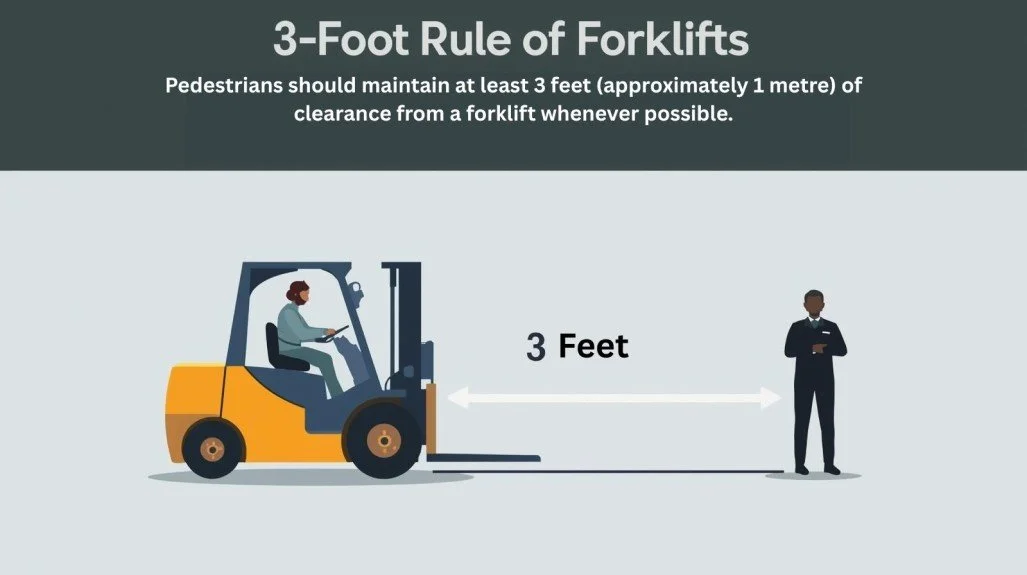
Safety around forklifts is a top priority in any workplace. One of the most commonly cited guidelines for pedestrian safety is the 3-foot rule, which helps reduce the risk of accidents involving forklifts. Understanding this rule can protect both operators and pedestrians and create a safer work environment.
The 3-foot rule is generally interpreted as follows:
Pedestrians should maintain at least 3 feet (approximately 1 metre) of clearance from a forklift whenever possible.
Some workplaces adopt a stricter internal rule, extending the safe distance to 10 feet to further reduce the risk of collisions.
There are several reasons why maintaining this clearance is important for safety:
Forklifts have a swing radius and rear-end swing during turns, which can catch pedestrians off guard.
There is always a risk of tip-over, especially when carrying heavy or high loads.
Blind spots around the forklift can hide pedestrians from the operator’s view, increasing the likelihood of accidents.
It’s important to clarify that the 3-foot rule is a safety guideline rather than a formal law, but it is widely incorporated into workplace safety programs and training.
By following the 3-foot rule and other best practices, workplaces can significantly reduce the risk of pedestrian injuries and ensure a safer environment around forklifts.
5. What Is the Best Way to Train Someone to Drive a Forklift Safely?
Training a forklift operator effectively requires more than just classroom instruction or a simple demonstration. The safest and most effective approach blends theory with hands-on practice, ensuring that operators understand both the principles of safe operation and how to apply them in real workplace situations.
The following infographic highlights the key steps for effective forklift training.

For successful forklift training, there are several key steps that should be followed:
Start with classroom theory, covering essential topics such as load handling, the stability triangle, and hazard awareness.
Demonstrate proper inspection procedures so that operators understand how to check the forklift for safety before every use.
Provide supervised, step-by-step hands-on driving, allowing trainees to gain confidence under the guidance of an experienced instructor.
Practice real workplace scenarios, including navigating tight aisles, ramps, and areas with pedestrian traffic, to prepare operators for conditions they will encounter on the job.
Conduct formal evaluation and feedback to ensure operators have achieved competency and understand where improvements are needed.
Ongoing coaching and refresher training are critical for maintaining safety and skills over time:
Regular refresher training helps operators stay sharp and ensures they continue to follow best practices.
Using professional certified instructors ensures consistency in training and compliance with legal and industry standards.
By following this structured approach, employers can develop skilled forklift operators who are competent, confident, and prepared to handle equipment safely in any workplace environment.
6. Additional Important Information
Beyond the basics of cost, duration, and legal requirements, there are several other important aspects of forklift training that every operator and employer should know. These details help ensure long-term safety, compliance, and operational efficiency in the workplace.
A few key points relate to ongoing training and recertification:
Recertification or refresher training is best done every three years, or sooner if the operator has been involved in an incident or near miss.
Different forklift types require separate training, meaning an operator must be trained and evaluated on each class of forklift they will use, such as counterbalance trucks, reach trucks, or order pickers.
Employers also have responsibilities that go beyond providing initial training. Proper oversight helps maintain a safe working environment:
Employers must maintain safe equipment, ensuring that all forklifts are in good working order before use.
Employers must provide personal protective equipment (PPE) to operators, such as high-visibility vests, helmets, and safety shoes.
Employers must perform regular inspections and enforce workplace traffic rules to prevent accidents.
Even with proper training, new operators can make common mistakes that compromise safety. Awareness of these pitfalls is crucial for both trainers and operators:
New operators sometimes turn with elevated loads, which can destabilize the forklift.
Driving too fast is a common error, increasing the risk of collisions and tip-overs.
Ignoring blind spots can lead to accidents, especially in busy areas with pedestrians.
Skipping pre-use checks can result in operating unsafe equipment, creating hazards on the job.
By addressing these additional considerations, both employers and operators can improve workplace safety, reduce the risk of accidents, and ensure that forklift operation remains efficient and compliant over the long term.
Safety and Compliance Start with Proper Training
Forklift training is more than a legal requirement, it’s an investment in workplace safety, efficiency, and confidence. By understanding the costs, timelines, and legal requirements, and by following best practices for hands-on and theory-based instruction, employers can ensure operators are fully competent.
Remember, proper documentation, ongoing refresher training, and adherence to safety guidelines like the 3-foot rule are essential for protecting both people and equipment.
Take the next step: schedule professional forklift training with certified instructors to keep your workplace safe and compliant.
For a complete overview of forklift certification, explore our ultimate guide to forklift certification here.
Get Proper Forklift Training with Forklifthub

Getting your forklift certification is the first step toward a successful career as a forklift operator. It ensures you have the skills, knowledge, and confidence to operate safely in any workplace. From filling out the ForkliftHub form to completing both classroom and hands-on training, every step prepares you for real-world forklift operation while meeting CSA safety standards.
Why Proper Training Matters
Unlocks job opportunities by proving your qualifications.
Boosts workplace safety for you and your team.
Gives peace of mind knowing you’re fully qualified for the equipment you’ll operate.
ForkliftHub makes it easy to find a course near you that fits your schedule and the type of forklift you’ll use. Take the first step today: fill out the ForkliftHub form, start your certification journey, and gain the skills and confidence to excel on the job.
Get the forklift training you need today. Contact Forklifthub now.
*Disclaimer
This post is intended for informational purposes only and does not constitute legal or professional advice. Forklift certification requirements may vary by province, employer, and specific job site regulations. Always consult with your employer, local regulatory authorities, or a certified training provider to ensure compliance with current safety standards and legal requirements. ForkliftHub is not responsible for any liability or damages resulting from the use of this information.